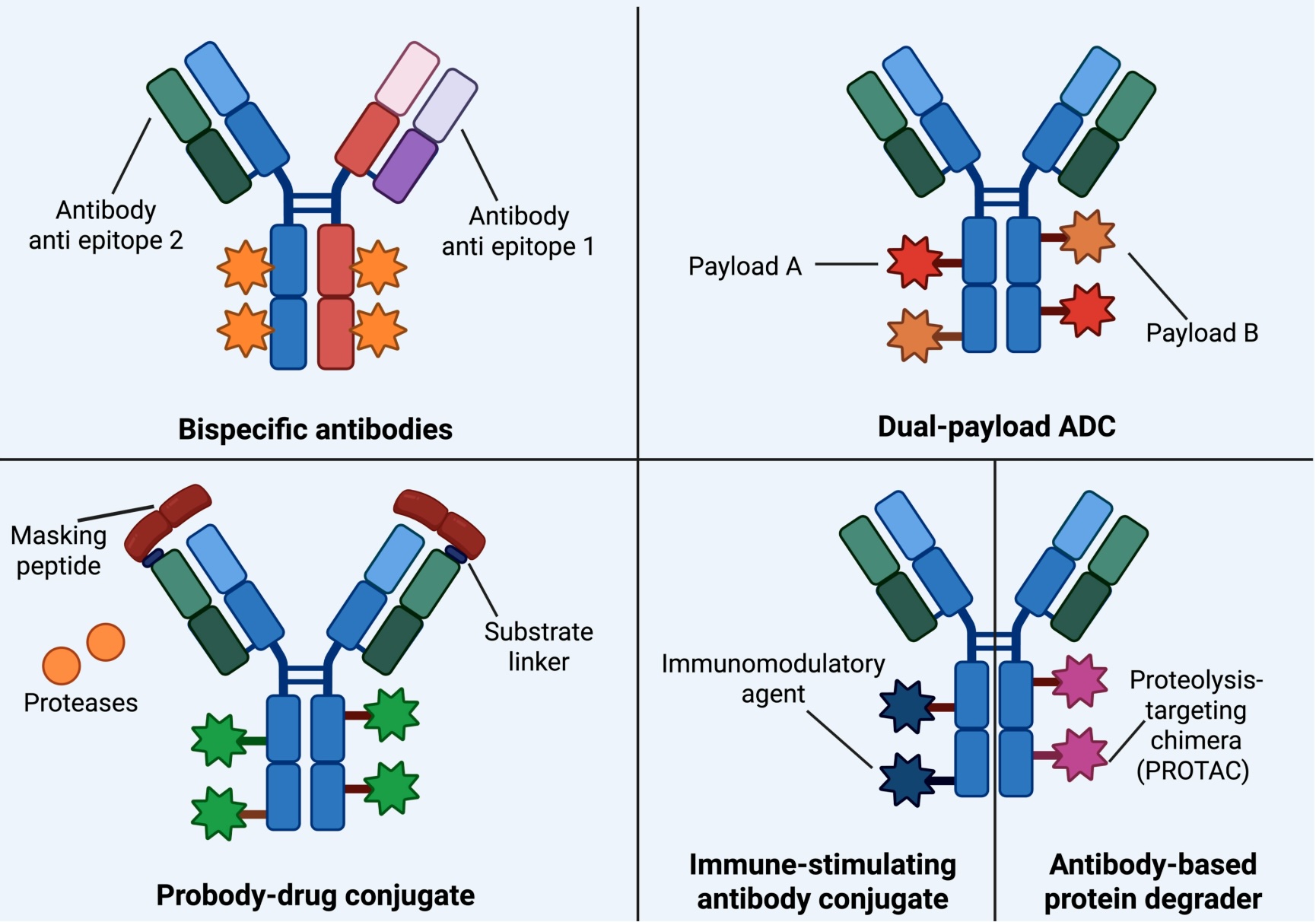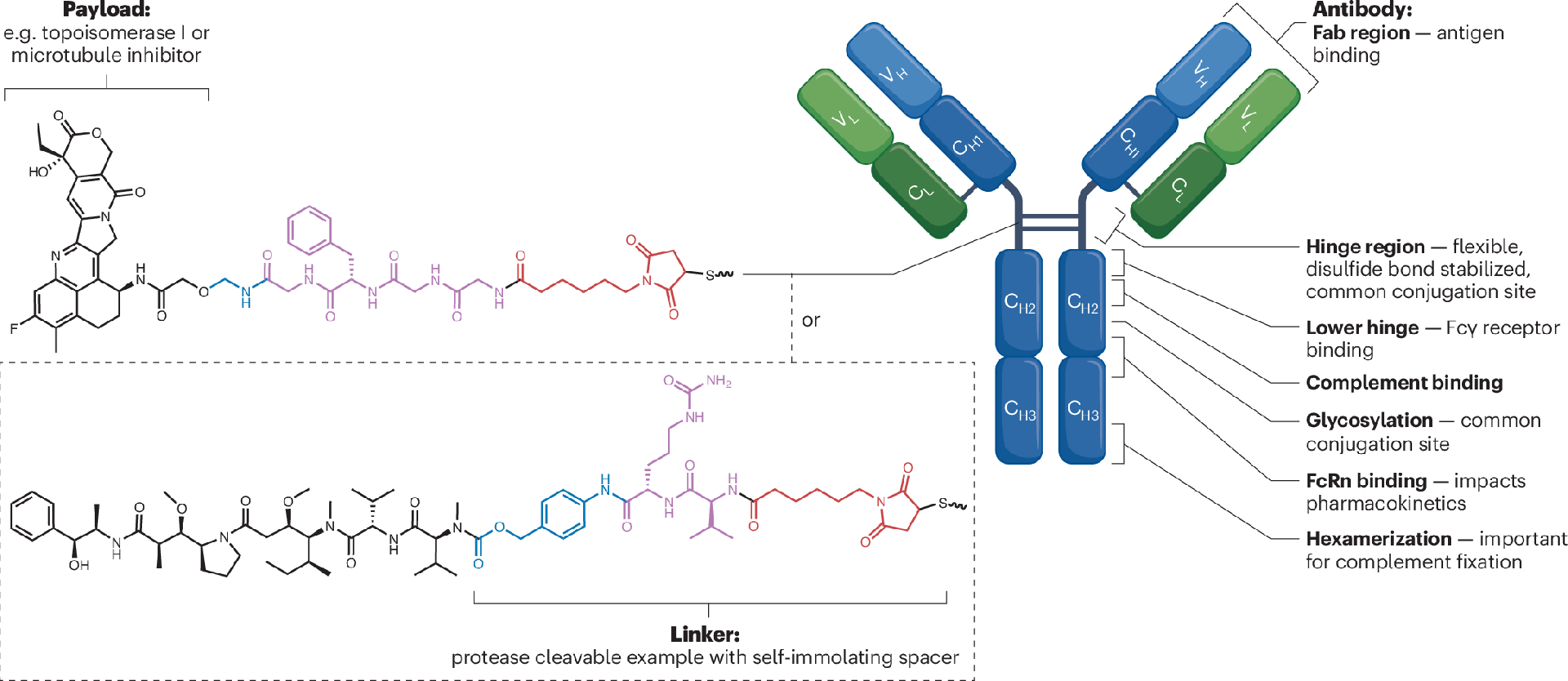
Antibody-drug conjugates (ADCs) combine the antigen specificity of a monoclonal antibody with the pharmacological activity of a linked payload. The linker connects these two components and plays a major role in stability, payload release, and systemic exposure. While the antibody, antigen, linker, and payload all shape ADC performance, the conjugation strategy determines where the payload is attached, how many payload molecules are added, and how uniform the final product will be.
Site-specific conjugation limits payload attachment to defined positions on the antibody instead of allowing reaction across many accessible residues. As ADC design becomes more sophisticated, this level of control is increasingly important.
Conventional ADC conjugation usually targets lysine residues or cysteine residues exposed after reduction of interchain disulfide bonds. These methods are established and practical, but they often generate heterogeneous mixtures with different drug loads and attachment patterns.
This is commonly described by the drug-to-antibody ratio, or DAR. An average DAR of 4, for example, does not mean every antibody carries four payloads. In reality, the preparation may contain a mixture of DAR0, DAR2, DAR4, DAR6, and DAR8 species. These subpopulations can differ in stability, clearance, efficacy, and toxicity.
Lysine-based conjugation can create many positional variants because an IgG contains numerous accessible lysine residues. Cysteine-based conjugation is somewhat more restricted, but partial reduction still produces a distribution of DAR species. Site-specific methods reduce this variability by controlling both the conjugation site and the stoichiometry of payload attachment.
However, a more homogeneous ADC is not necessarily a more effective one. If the payload is attached at the wrong location, it may interfere with antigen binding, alter Fc-mediated functions, reduce stability, or place the linker-payload in an unfavorable local environment.
Studies have shown that conjugation site can affect in vivo stability, pharmacokinetics, and therapeutic activity. Factors such as solvent exposure, steric accessibility, and local charge all matter. In practice, site selection should be guided by functional and developability data, not by homogeneity alone.
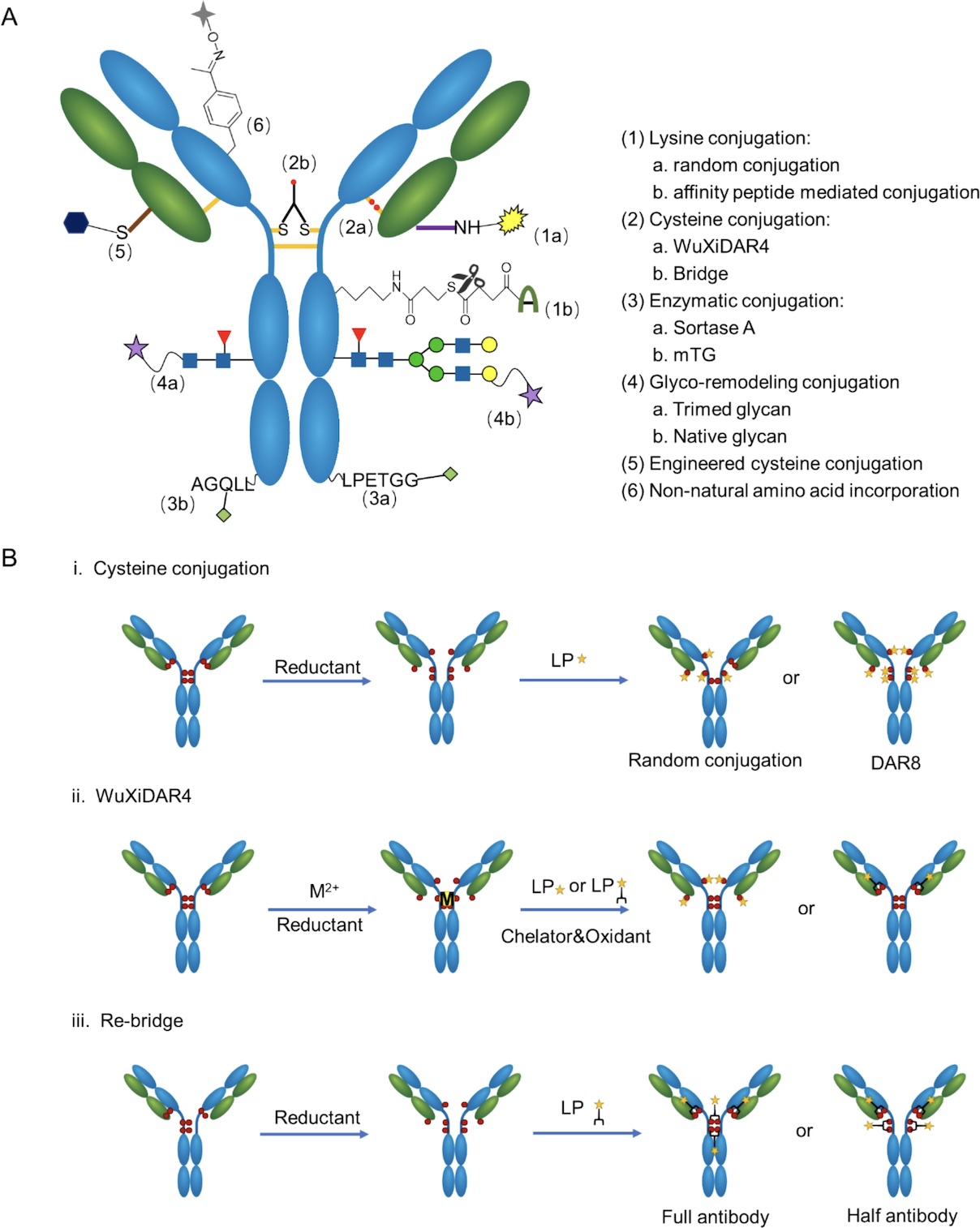
Several approaches are used to achieve more controlled ADC conjugation:
Engineered cysteine conjugation introduces cysteine residues at defined positions to create reactive thiol handles. This is one of the most established site-specific platforms and often supports defined DAR values such as 2 or 4.
Disulfide rebridging reconnects reduced interchain cysteines with bifunctional reagents while introducing a payload or handle. This can preserve the native sequence but requires careful control of reduction and rebridging chemistry.
Enzyme-mediated conjugation uses enzymes such as transglutaminase, Sortase A, or formylglycine-generating enzyme to modify defined motifs on the antibody. These methods can be highly precise but may add process complexity.
Glycan-directed conjugation modifies Fc glycans to install reactive groups at naturally localized positions. This avoids changes to the amino acid sequence but may influence Fc-mediated functions.
Non-canonical amino acids introduce unique reactive groups during antibody expression, enabling bioorthogonal chemistry at a predefined site. This offers high precision but places greater demands on expression and manufacturing.
Affinity-directed or site-selective lysine conjugation uses directing elements or local lysine reactivity to target specific native residues without genetic engineering. These methods are promising but can be sequence-dependent.
There is no single best conjugation platform for every ADC. The right strategy depends on the target product profile, including desired DAR, payload hydrophobicity, antibody format, need to preserve Fc function, and manufacturing requirements.
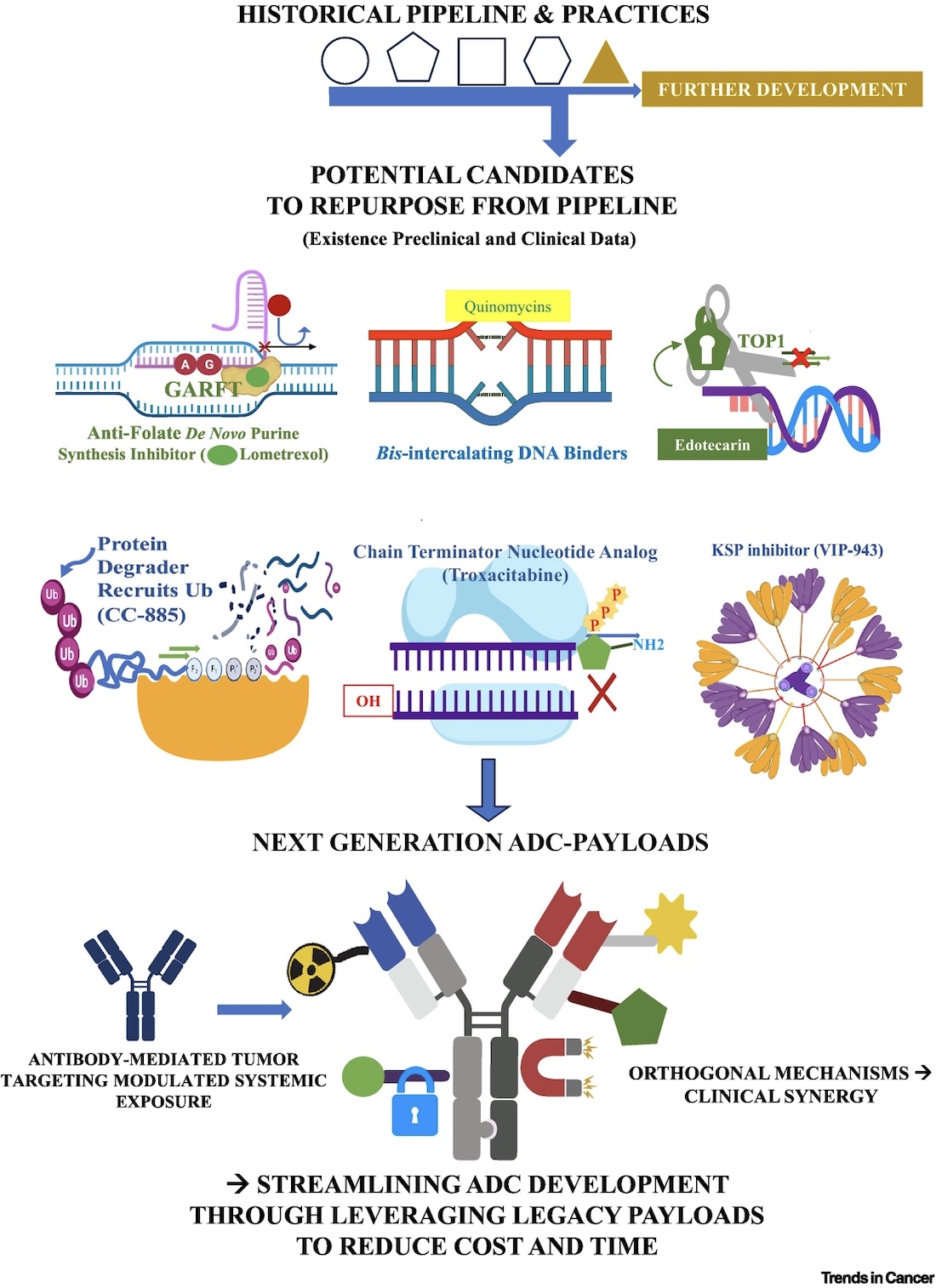
In early discovery, speed and efficient screening may be the priority. In later development, the focus usually shifts to scalability, impurity control, reproducibility, and stability. These considerations become even more important in next-generation ADCs, especially multi-payload designs, where positional and stoichiometric control are critical.
Efficient evaluation of site-specific strategies requires coordinated antibody expression, conjugation, and analytical characterization. Biointron’s high-throughput ADC service integrates these steps for preclinical screening, supporting monoclonal and bispecific antibodies, customizable DAR values, client-supplied or in-house small molecules, and conjugation through non-canonical amino acids. According to Biointron, the custom high-throughput ADC workflow can be completed in approximately two to three weeks.
This type of integrated platform can be useful when comparing multiple antibody sequences, conjugation sites, linker-payload combinations, or loading levels in parallel.
Site-specific conjugation gives ADC developers greater control over molecular composition and enables more defined studies of conjugation site, DAR, linker stability, and payload behavior. However, the selected site must still preserve antibody function, support stable circulation, and remain compatible with reproducible manufacturing.
References:
Fan, Q., Chen, H., Wei, G., Wei, D., Wang, Z., Zhang, L., Wang, J., & Zhu, M. (2025). A review of conjugation technologies for antibody drug conjugates. Antibody Therapeutics, 8(2), 157-170. https://doi.org/10.1093/abt/tbaf010
Shatzer, K., & Muller, F. L. (2026). Repurposing payloads: next generation of antibody–drug conjugates. Trends in Cancer. https://doi.org/10.1016/j.trecan.2026.04.001
Alradwan, I. A., Alnefaie, M. K., AL Fayez, N., Aodah, A. H., Majrashi, M. A., Alturki, M., Fallatah, M. M., Almughem, F. A., Tawfik, E. A., & Alshehri, A. A. (2025). Strategic and Chemical Advances in Antibody–Drug Conjugates. Pharmaceutics, 17(9), 1164. https://doi.org/10.3390/pharmaceutics17091164
Conilh, L., Metrangolo, V., Crescioli, S., Reichert, J. M., & Dumontet, C. (2026). Navigating the clinical progress of antibody-drug conjugates: Emerging opportunities and remaining challenges. Cell, 189(10), 2791–2820. https://doi.org/10.1016/j.cell.2026.04.016
In this article, we explore the major trends shaping the future of targeted canc……
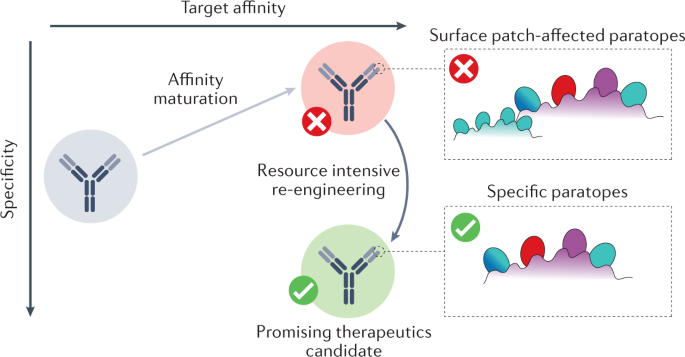
Affinity maturation can improve binding to the intended target, but it can also ……
ADC development is no longer limited to the antibody-linker-toxin model. The fie……